
What Happens When You Actually Manage Outreach Like a System
10 Mins Read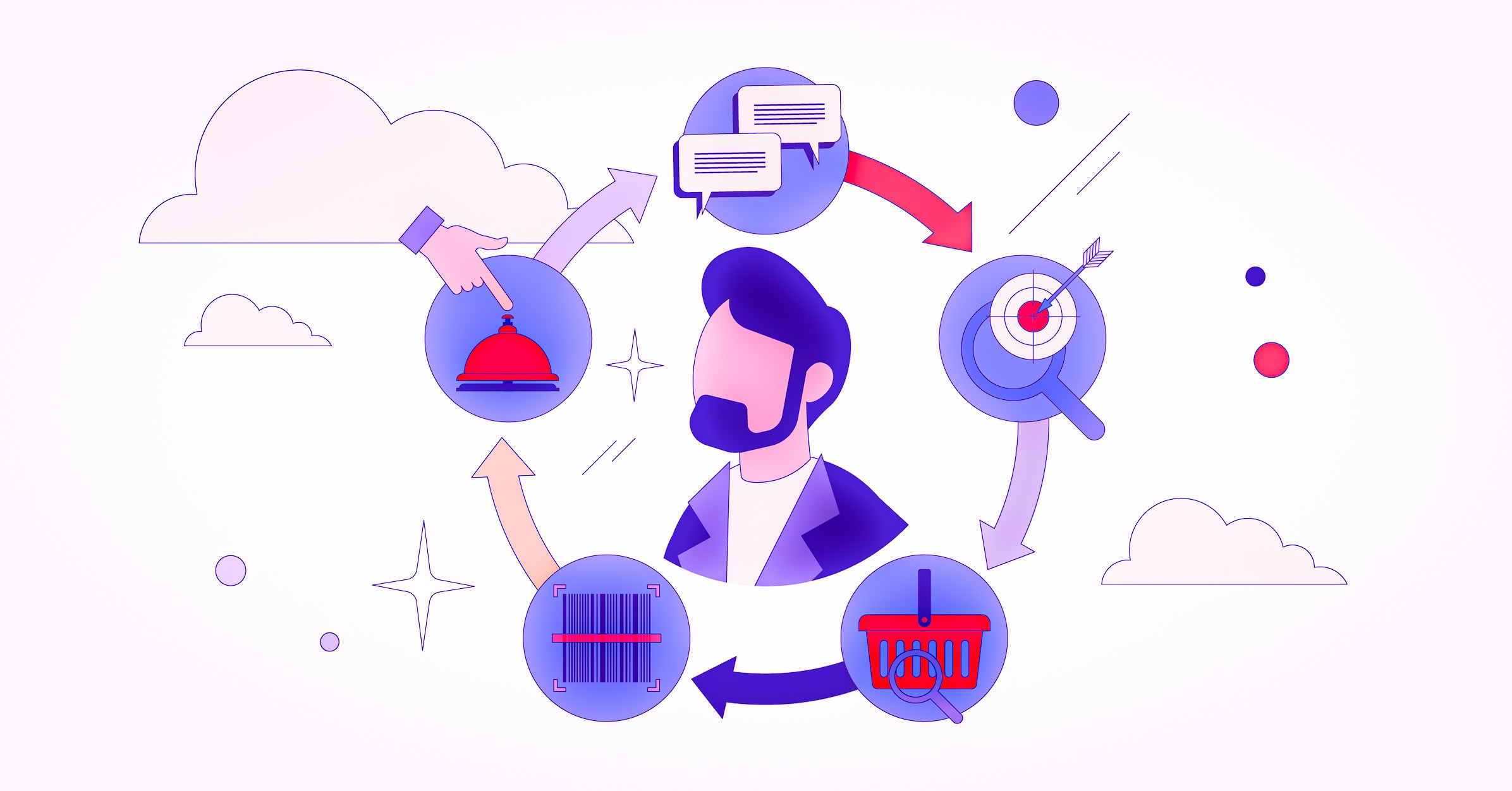
Managing outreach like a system turns disconnected signals, tasks, and follow-ups into a coordinated process where every action is driven by context and clear priorities.
Most outreach is more chaotic than it looks
From the outside, a modern outbound program can look highly organized. There is a CRM, a sequencing tool, account lists, dashboards, intent data, templates, and a defined number of touches each salesperson is expected to complete.
Behind that structure, however, there is often a surprising amount of improvisation. Sales representatives decide which accounts to work based on different signals. Marketing runs campaigns using its own priorities. Follow-ups depend on individual habits, and valuable information gets scattered across inboxes, call notes, spreadsheets, and CRM records.
The tools may be connected, but the work itself often is not. Each person is making dozens of small decisions independently, which makes consistent execution difficult even when everyone is working hard.
The problem starts with how accounts are prioritized
Most sales teams have far more potential accounts than they can realistically pursue. The difficult part is deciding which ones deserve attention today.
In many organizations, that decision is surprisingly subjective. One salesperson starts with recently assigned leads. Another checks who opened an email. Someone else focuses on the largest companies in their territory. A manager may suddenly ask the team to prioritize a particular industry because a deal recently closed there.
None of these approaches is necessarily wrong, but together they create inconsistency. The same account might receive immediate attention from one representative and sit untouched for weeks with another.
Managing outreach as a system begins by making prioritization less dependent on individual interpretation. Teams need a shared way to evaluate fit, timing, intent, previous interactions, and other relevant context before deciding where attention should go.
Outreach should respond to what is happening
Traditional outbound often starts with a list. The team identifies companies that fit a target profile, finds contacts, places them into sequences, and begins sending messages.
The problem is that a list tells you who could buy, not who has a reason to engage now.
A company that perfectly matches your ideal customer profile may have no interest in changing anything this year. Another account that looked less important a month ago may have hired a new executive, started researching your category, returned to your website, or reopened a previously delayed initiative.
A systematic approach treats account priority as something that changes over time. Instead of deciding once that an account is important, the team continuously adjusts based on what is happening inside and around that business.
This makes outreach more responsive to the buyer rather than simply more consistent for the seller.
Context should travel with the account
Prioritization is only the beginning. Once an account is selected, the salesperson still needs to understand why it deserves attention.
This is where many outreach processes become inefficient. A representative receives a notification that an account is showing intent, then spends the next 15 minutes trying to figure out what that actually means. They check the CRM, search previous emails, review LinkedIn, look at marketing engagement, and perhaps ask a colleague whether anyone has spoken with the company before.
The information exists, but the employee has to assemble the story manually.
When outreach operates as a system, context follows the account. Previous conversations, recent engagement, relevant signals, open opportunities, and other useful information are brought together around the decision to act.
The salesperson can then focus on the question that actually requires judgment: what is the best way to approach this company right now?
Messaging becomes part of the decision, not a separate task
Many outbound programs separate targeting from messaging. One process determines who should be contacted, while another provides templates for what representatives should say.
That separation often creates generic outreach.
A company might be prioritized because of a specific change in its business, but then receive the same email as every other company in the sequence. The targeting may be intelligent while the message ignores the very context that made the account interesting.
Managing outreach systematically connects those two decisions. The reason an account was prioritized should influence the message it receives. A returning opportunity should not be approached like a cold prospect, and someone responding to a recent business change should not receive the same message as a company showing general interest in a category.
This does not mean every email needs to be written from scratch. It means the outreach should reflect what the team already knows.
Follow-up stops being a memory problem
A surprising amount of sales execution still depends on people remembering what to do next.
A prospect says to reconnect next quarter. Someone promises to send additional information after a call. An account becomes more active after months of silence. A previously closed opportunity suddenly begins engaging with the company again.
Some representatives are excellent at managing these details. Others miss things, especially when they are handling dozens or hundreds of accounts at once. Even the most organized salesperson eventually reaches the limits of what they can track manually.
A system should maintain that continuity. It should know what happened previously, what the next step was supposed to be, and whether new information changes the priority.
This makes follow-up more consistent without forcing salespeople to constantly maintain personal reminders, spreadsheets, and mental checklists.
Automation becomes more selective
Managing outreach as a system does not mean automating every interaction. In fact, it often means becoming more selective about where automation belongs.
Basic operational work can happen automatically. Records can be updated, information can be gathered, accounts can be monitored, reminders can be created, and routine follow-ups can be prepared without requiring someone to perform each step manually.
The customer-facing decision deserves more care. A large strategic account may require a thoughtful personal message. A prospect that has already spoken with the company may need a different approach from someone completely new. A sensitive customer relationship may require a human to decide whether outreach should happen at all.
The goal is not to remove people from the process. It is to remove unnecessary work around the decisions where people add the most value.
Sales and marketing stop operating separate outreach machines
Outreach becomes much harder to manage when marketing and sales are working from different views of the customer.
Marketing may be nurturing an account through campaigns while sales is running an outbound sequence against the same people. One team may believe an account is highly engaged while the other knows the opportunity was recently paused. A customer can end up receiving messages that make sense individually but feel completely disconnected when experienced together.
A systematic approach treats those interactions as part of one relationship. Marketing engagement informs sales prioritization, while sales conversations influence what marketing does next. If an account is actively evaluating, communication can adjust. If a project has been postponed, the system can respond accordingly instead of continuing with the same cadence.
The result is not simply better internal coordination. It creates a more coherent experience for the buyer.
Managers get a clearer picture of what is working
When every representative manages outreach differently, it becomes difficult to understand why results vary.
One person may be successful because they are excellent at recognizing buying signals. Another may have developed a strong follow-up habit. Someone else may be spending most of their time on accounts that were unlikely to convert in the first place.
Activity metrics rarely explain these differences. Knowing that one representative sent 300 emails and another sent 180 does not tell you whether either person focused on the right accounts.
A system makes the decision process more visible. Leaders can evaluate which signals led to productive conversations, which types of accounts progressed, where opportunities stalled, and whether certain outreach approaches consistently performed better.
That feedback can then improve the system itself. Prioritization becomes more accurate, messaging evolves, and teams learn from actual outcomes rather than relying on assumptions.
The sales day starts to look different
The practical impact of orchestration is easiest to see in the daily experience of a salesperson.
Instead of beginning the morning by searching through the CRM and deciding where to focus, the representative starts with a clearer set of priorities. The accounts are there for a reason, and the context behind that prioritization is already available.
Instead of researching every account from scratch, the representative reviews the information that matters and adds human judgment where necessary. Instead of manually updating multiple systems after each interaction, much of the administrative work happens around the workflow.
The salesperson still owns the relationship. They simply spend less time organizing the machinery around it.
Over the course of a week, those small changes matter. More time goes toward conversations, preparation, and strategy, while less time disappears into searching, sorting, updating, and deciding what to do next.
Outreach becomes a learning system
Perhaps the biggest difference between a collection of sales tools and an actual outreach system is what happens after the work is done.
A sequence sends messages and reports results. A system should learn from those results.
If certain signals repeatedly lead to strong opportunities, they should influence future prioritization. If accounts with a particular combination of behaviors rarely convert, the team should adjust how much attention they receive. If a message works well in one situation but poorly in another, that context should shape future outreach.
The process becomes a feedback loop. Decisions lead to actions, actions create outcomes, and outcomes improve the next round of decisions.
This is how outreach becomes more precise over time without simply becoming more automated.
The transformation is mostly about removing friction
The difference between chaotic outreach and orchestrated outreach is not necessarily visible in the number of tools a company uses. A team could keep much of the same technology and still operate very differently.
The change happens in how decisions connect.
Account signals influence prioritization. Prioritization influences messaging. Conversations influence follow-up. Sales activity informs marketing. Results improve future targeting. Each step has a relationship with what happened before it and what should happen next.
Once those connections exist, people no longer have to rebuild the process manually every day. The technology supports the flow of work rather than creating another place where work has to be managed.
Final thought
Most companies do not need to send more outreach. They need to become more deliberate about how outreach decisions are made and how those decisions connect across the revenue process.
Managing outreach like a system means knowing why an account deserves attention, carrying the right context into the conversation, coordinating sales and marketing activity, and using outcomes to improve what happens next. Automation can support that process, but the real improvement comes from connecting the pieces instead of optimizing each one separately.
When that happens, outreach stops feeling like a constant effort to keep lists, tasks, signals, and follow-ups under control. The team gains a clearer operating rhythm, buyers receive communication that makes more sense, and revenue leaders get a better understanding of why opportunities move forward or stall. The transformation from chaos to orchestration is ultimately a transformation from more activity to better decisions.
Never miss anything!
Move past the ‘how-to’ and get to the ‘why.’ Get blueprints and direct insights from the Revy expert team.
Let's Get Started
If you have an idea for growing your business, we're ready to help you achieve it. From concept to launch, our senior team is ready to reach your goals. Let's talk.